Parv Kapoor

Ph.D. Student in Software Engineering
Software and Societal Systems Department
School of Computer Science
Carnegie Mellon University
parvk [at] cs [dot] cmu [dot] edu
CV / Google Scholar / Linkedin
Update: I am defending my thesis in Summer 2026 and am an RSS Pioneer 2026!
Hi! I am a Ph.D. in Software Engineering student at Carnegie Mellon University advised by Dr. Eunsuk Kang and Dr. Sebastian Scherer. During my Ph.D., I have interned at Microsoft Research, where I worked with Dr. John Langford on scaling long-horizon reasoning in large language models using Matryoshka representations. I was also a researcher with General Robotics working with Dr. Ashish Kapoor on developing safe robot foundation models.
I am interested in safe and robust robot learning and my work has been focused on:
- Safe deep learning-based robotics
- Vision-based control barrier functions for Aerial Robotics (RSS 25)
- Using pretrained embeddings based behavior specifications for planning with world models (Under submission)
- Efficient differentiable logic networks for trajectory optimization and diffusion policies (RA-L, ICRA 2026)
- Embedding logical rules into autoregressive pre-trained transformers for trajectory planning (RSS SA 24)
- Embedding general aviation rules into learning from demonstration policies using MCTS (ICRA 23)
- Bridging the sim-to-real gap for deploying learned policies
- Constrained Decoding for Robot Foundation Models (ICML 26)
- Enhancing policy interpretability through trajectory analysis (ICSE 25)
- Identifying failure cases of safe reinforcement policies using simulation guided search (FM 24)
- Requirement decomposition for integrated task and motion planning (NFM 24)
Beyond my core research, I have also developed a custom deep learning library with implicit differentiation layers from scratch, conducted pilot user studies for trustworthy human-robot interaction, and contributed to the simulation and the foundation model workstreams for the General Robotics’ GRID platform.
I am currently a part of AirLab and SoDA. Prior to joining CMU, I worked with Dr. Jyotirmoy Deshmukh’s CPS VIDA lab at University of Southern California. I have also researched with Dr. Thao Dang at the Université Grenoble Alpes and Dr. David Marshall at the Cardiff University.
Reviewer: RSS 2026, RSS Pioneers 2026, ICLR 2026, IASEAI 2026, L4DC 2025, RSS 2025, CoRL 2026
Teaching Assistant: 10-623 Generative AI, 17-723 Designing Large Scale Systems at CMU
news
| May 5, 2026 |
|---|
| May 5, 2026 |
| Jun 7, 2025 |
| May 7, 2025 |
| Nov 23, 2024 |
selected projects
ICML 2026
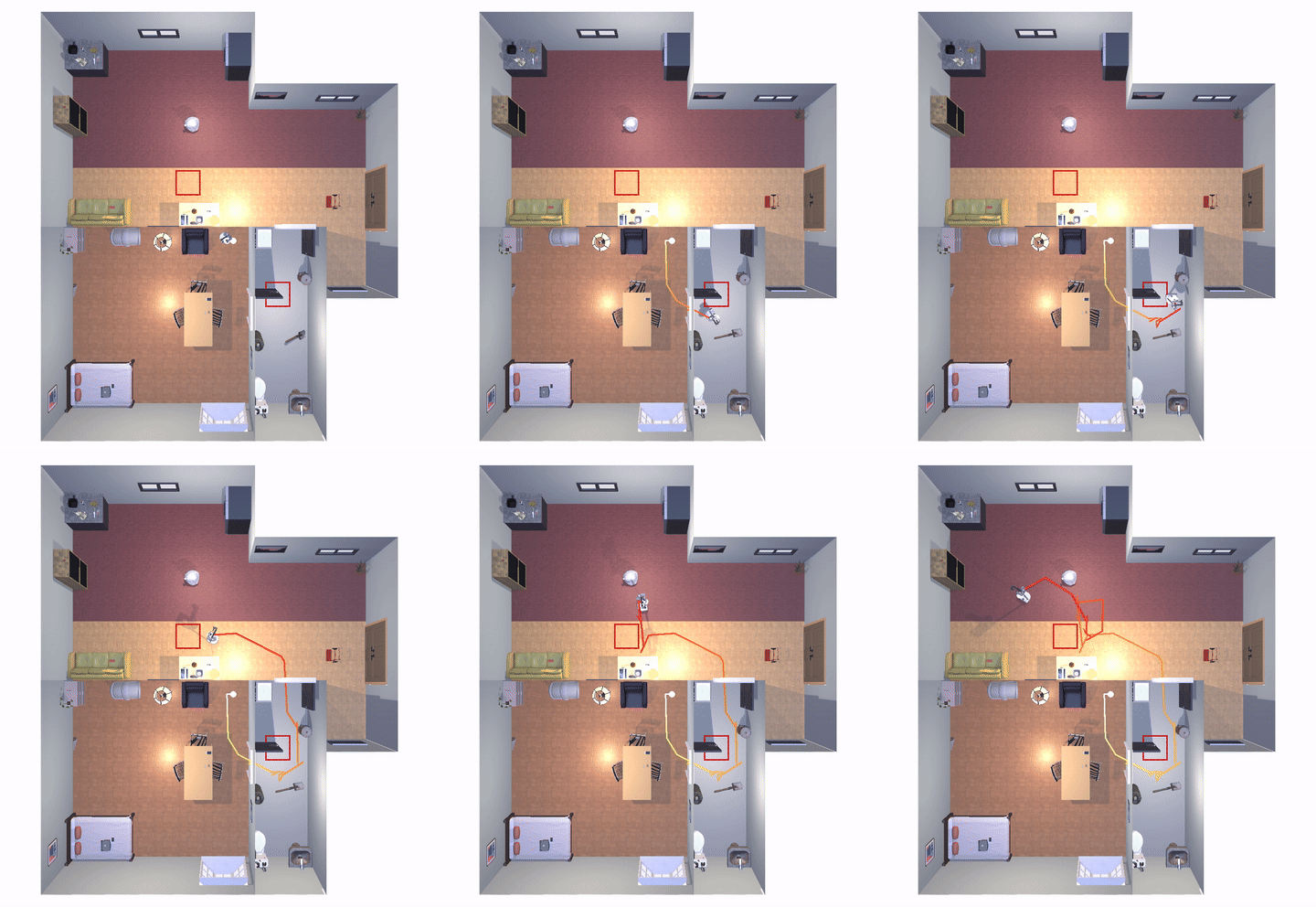
Constrained Decoding for Robot Foundation Models
Enforces safety specifications expressed as Signal Temporal Logic (STL) formulas on transformer-based robot foundation models at inference time — no retraining required.
RSS 2025
ViSafe — Vision-enabled Safety for High-speed Detect and Avoid
Vision-based control barrier functions for UAV safety validated via sim-to-real transfer from Isaac Sim to field deployment, achieving 71% improvement over baselines across 70+ flight hours.
RA-L / ICRA 2026
STLCG++ — Differentiable Signal Temporal Logic for Robot Learning
A PyTorch/JAX library integrating differentiable temporal logic into robot learning pipelines, delivering 100× speed-ups and outperforming baselines for trajectory optimization and diffusion-policy case studies.
Under Submission
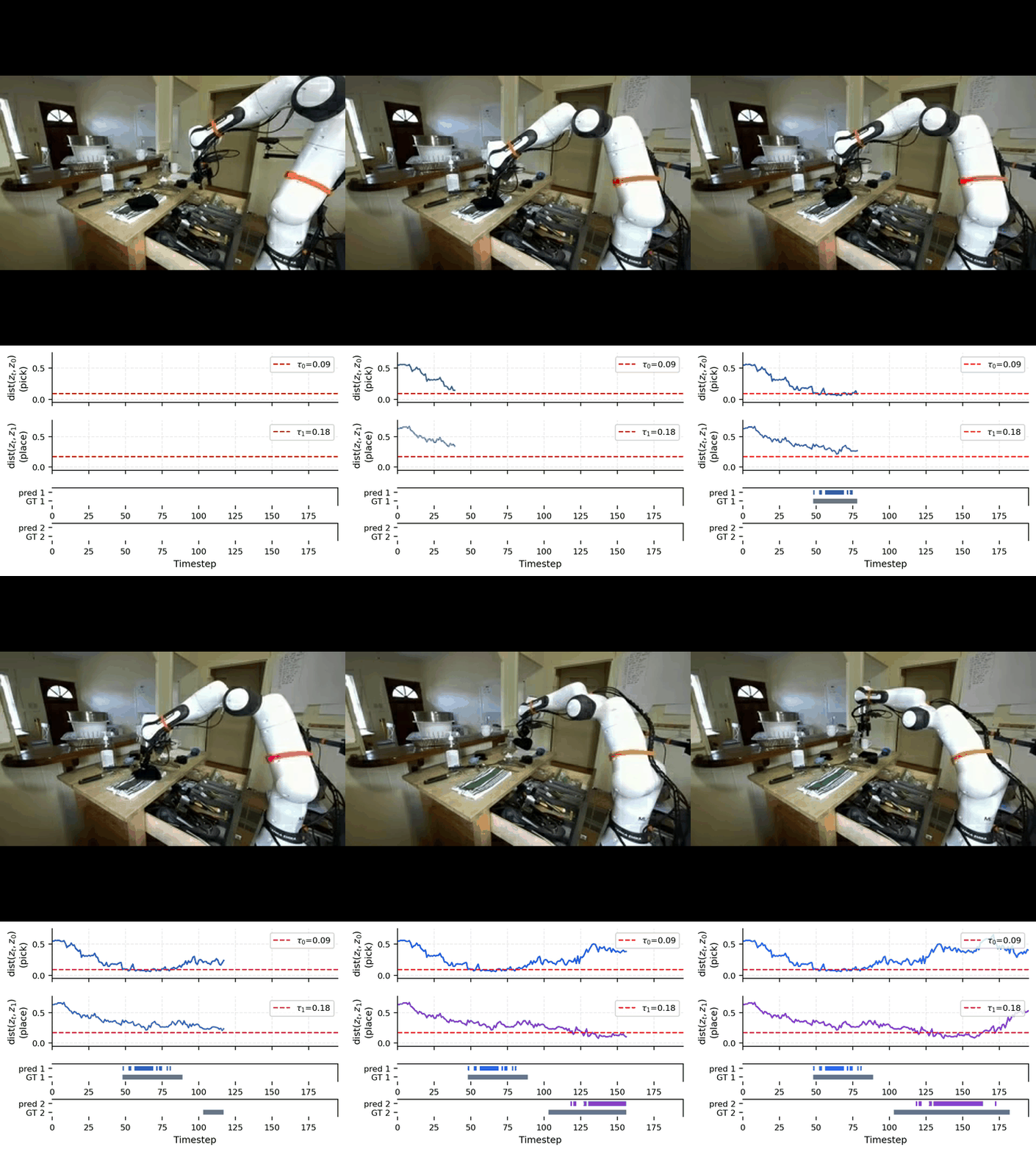
ETL: Runtime Monitoring via Embedding Temporal Logic
A temporal logic framework for runtime monitoring of perception-based autonomous systems directly in learned embedding spaces, without discrete state abstraction.
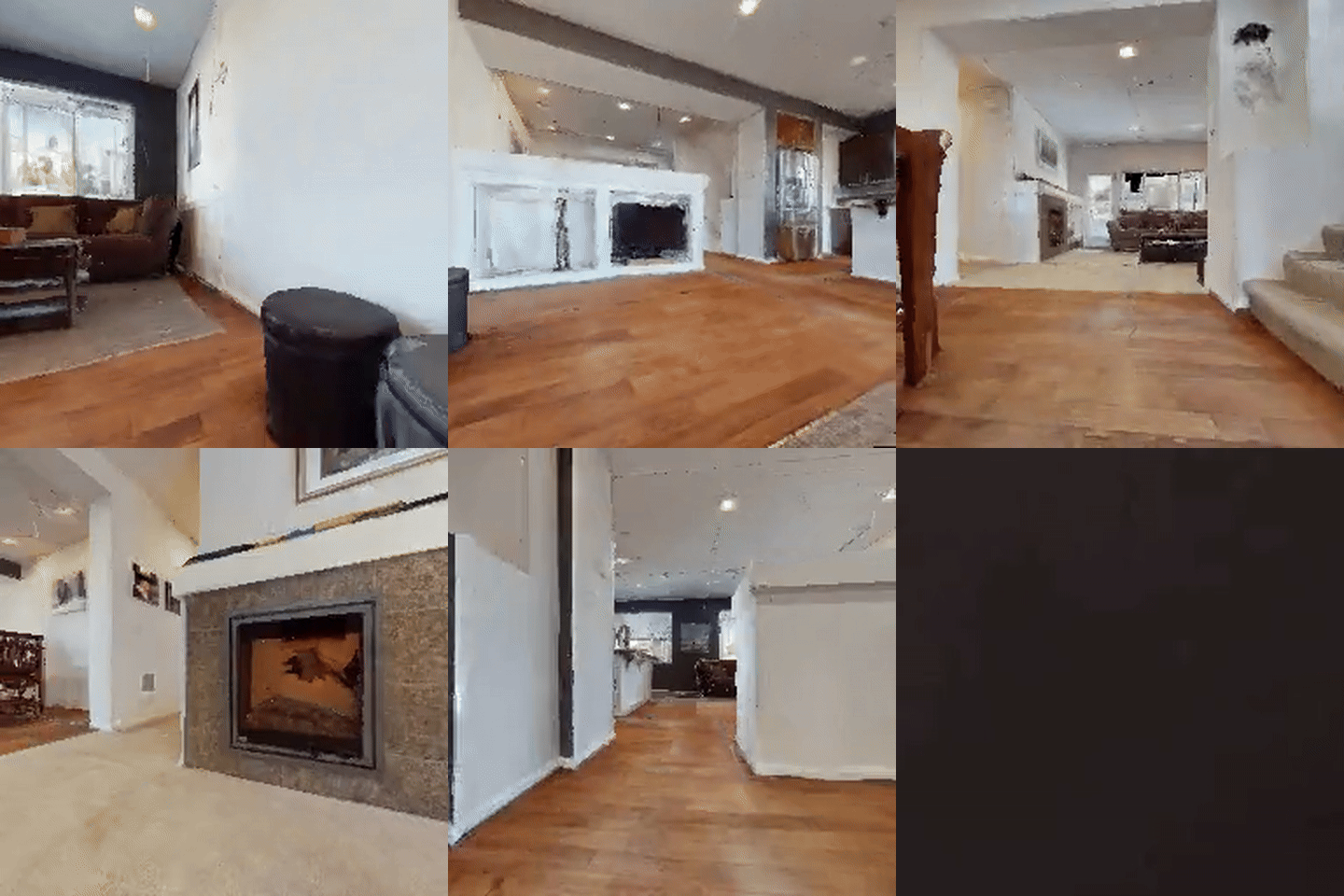
Robot Foundation Models for Navigation and Manipulation
Pretrained multi-modal robot foundation models via large-scale behavior cloning for mobile manipulation and navigation, with General Robotics.

ICSE 2025
ATLAS: Learning Formal Behavior Rules from Robot Demonstrations
Built a framework for learning formal LTL behavior specifications from robot demonstrations using MaxSAT, enabling structured policy synthesis with user-defined constraints.
ICRA 2023
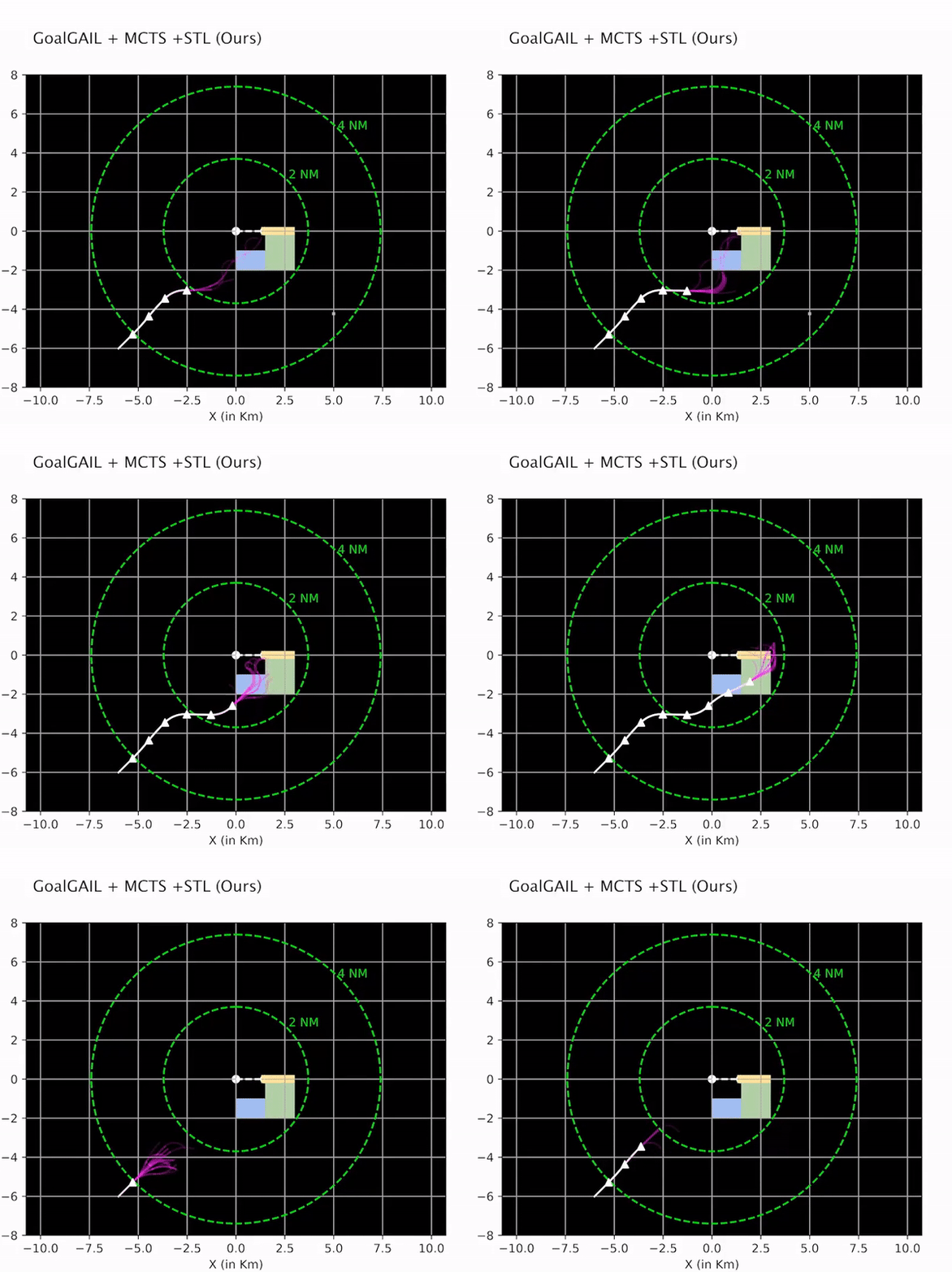
Online STL Tree Search for Guided Imitation Learning
Employed Monte Carlo Tree Search (MCTS) as a means of integrating STL specification into a vanilla LfD policy to improve constraint satisfaction.
FM 2024
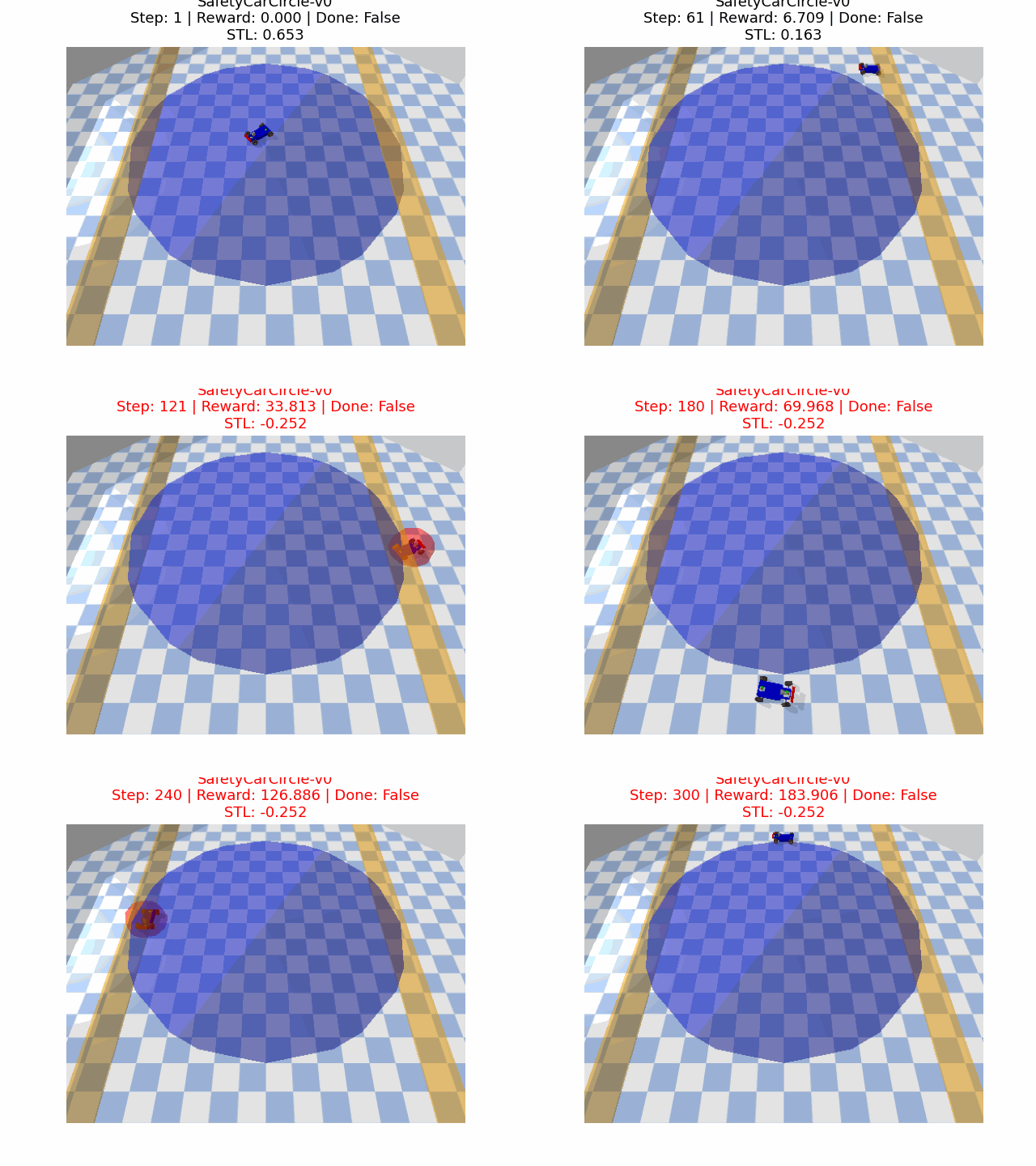
RL Robustness Analysis
Analysing robustness of safe reinforcement learning policies and control agents in the face of environmental deviations such as steering, friction, and sensor noise.
experience

2019

2020–21

2021–26

2024–25

2025